

How To Draw Hair How To Draw Hair For Beginners
If the thought of cartoon hair overwhelms you - you lot're non alone. Information technology's easy to meet all of the details and textures within hair and assume that it must be difficult to capture information technology all in a cartoon. But information technology doesn't have to be overwhelming and nosotros can simplify the process, making drawing hair a chip more manageable.
In this lesson, we'll take a look at how to draw hair and I'll share with you a simple footstep by stride arroyo of observation and application of media that can be applied to any type of hair.
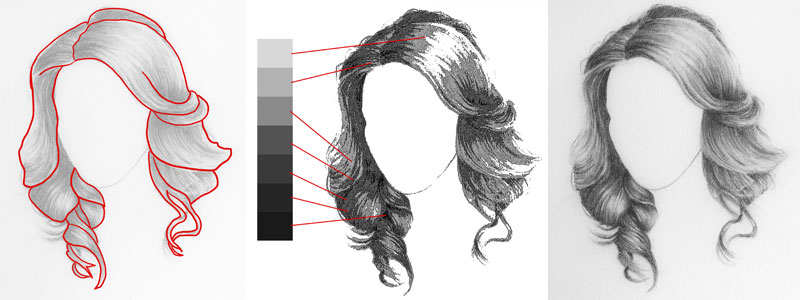
We'll commencement await at an easy to follow method that is broken down into 4 distinct processes...
Drawing Hair - The Four-Step Approach
I may exist defining this procedure as a 4-step approach, yet information technology's more like a three-step approach. The third and fourth steps are combined and are executed at the aforementioned time. Before we begin the procedure of drawing the hair, nosotros need to exist certain that the structure of the head is drawn in identify. The structure of the head dictates the shape and menstruum of the hair and should be divers before we begin drawing the hair.
Step One - Define the Outer Contour of the Hair
Assuming that the structure of the head is in place, the first step is to define the outer contour or outline of the hair. This includes the lines that are formed every bit the pilus overlaps the forehead, portions of the face, and the shoulders. In many cases, the hair lifts off of the cranium and may overlap much of the face. Of class, every head of hair is different and the contours that are drawn at this stage volition exist different for every subject.
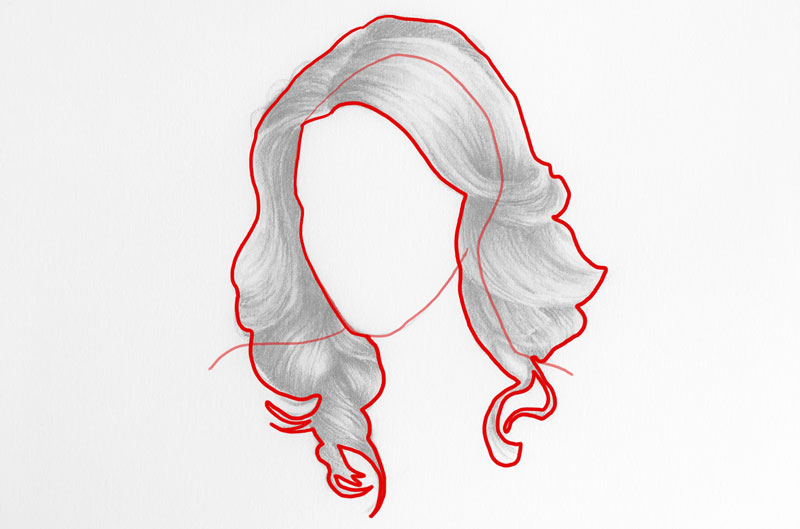
Tip: The medium that you use will influence how you approach drawing the hair. In this lesson, graphite pencils are used. For example, if y'all are drawing hair with pastels, you may cull to fill in the shape of the hair with solid color and skip drawing the contours.
We'll draw the profile lines lightly and loosely with a harder and lighter, 2H pencil. We're careful not to place too much pressure on this harder pencil as this can atomic number 82 to indenting in the surface of the newspaper.
Stride Two - Draw Shapes For The "Clumps" of Pilus
As nosotros draw the contour lines, defining the overall shape of the hair, we'll as well draw smaller shapes for clumps of hair. Hair strands naturally collect and create a course (which is what I am referring to as a "clump").
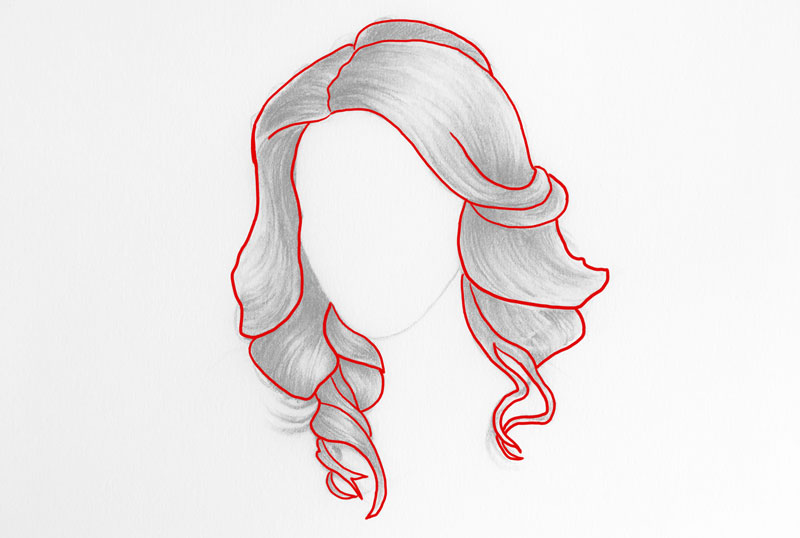
Information technology conspicuously doesn't make sense to draw every strand of hair. Not simply would this take an incredible amount of fourth dimension to reach, but information technology too would lead to very unnatural looking pilus. Instead, nosotros demand to consider the hair equally a grade. Nosotros'll define the volume of these forms in the side by side pace, merely for at present nosotros'll concentrate on defining the shapes.
Footstep 3 - Developing the Volume Through Value
We empathise forms considering of the mode in which light interacts and behaves on them. Nosotros understand lite through the utilise of value. Therefore, we understand forms in a drawing through the utilise of value. Value is the darkness or lightness of a colour. The placement of dark and lite values on a subject inform us of the intensity of low-cal and the nature of the form.
We must consider the values and tones that are observed within the hair and include them in our cartoon in social club to communicate the book of the hair. In most cases, a full range of value is present. This ways that nosotros're likely to notice the darkest darks, the lightest lights, and the middle values all within a head of pilus.
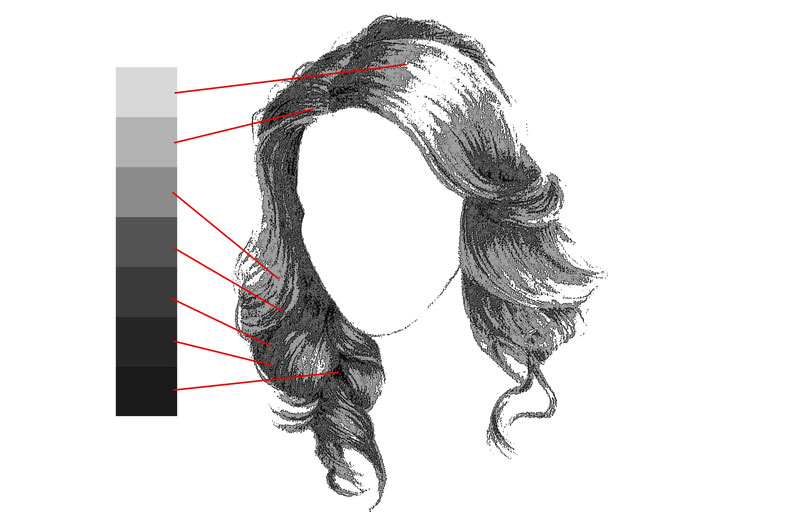
Because of the nature of calorie-free, we can presume a few things...
- Locations that recede will be darker in value.
- Locations that protrude will be lighter in value.
- No thing what the "colour" of the hair, there will all the same be light and dark values.
We know that locations inside the hair that are closer to the light source or extend out from the head are probable to "catch" more calorie-free. Naturally, this results in an expanse of lighter value.
Nosotros too know that areas that recede or are blocked from receiving light should be darker in value.
All hair colors will feature a total range of value. Blonds have locations of darker tone in their hair, and people that accept black hair accept areas that are almost white (highlights).
If we continue these things in mind, so we can assume that (in well-nigh cases) the parts of the pilus and the areas effectually the face will exist darker in value since these areas recede. We also know that highlights are most likely to be plant on the elevation of the head, closest to a low-cal source in a higher place.
To command the value fully, we'll start with a harder 2H pencil and develop the locations of darkest value, the mid tones, and the locations of lite value. We'll do our best to preserve the areas of strongest highlight, allowing the white of the newspaper to do the work for us.
Later on the harder and lighter pencil is applied, we'll progress to a darker and softer one - addressing the areas of darkest value and tone. As we develop the value range and create the illusion of form, we'll as well consider the texture.
Pace Four - Draw the Texture of the Pilus
(The texture of the hair is actually defined every bit the value is developed. So, the third and fourth steps of this procedure are addressed meantime.)
Texture, similar form, is too defined largely through the use of value. Light values and dark values work together to inform us of the texture of the subject. High dissimilarity between values with lilliputian transition or gradation often leads to the illusion of coarse texture.
Smooth transitions betwixt values with even gradations often leads to the illusion of a smoother surface texture.
Simply there is more to texture than the relationships of tone and value. The surface of the newspaper, the medium used, and the mode in which information technology is applied are all contributing factors as to how the texture of the subject may exist perceived by the viewer.
Hair is soft, but in that location should be some indication of linear texture. To create the impression of linear texture, we'll apply the medium using directional strokes that period over the form of each "clump" of hair. These lines are sometimes referred to every bit cross contour lines.
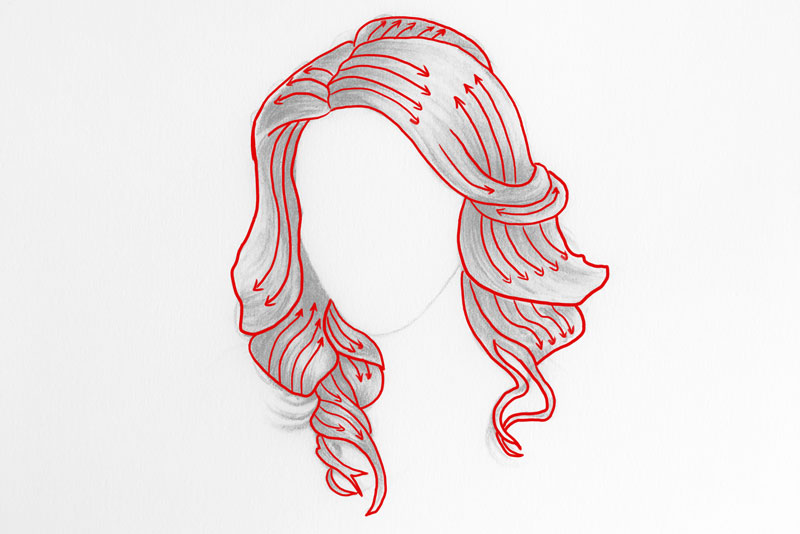
For each layer of graphite that we apply, nosotros'll utilize a blending stump to work the medium into the tooth or texture of the paper. This will help to create the impression of softness and polish whatever inconsistencies produced by the softer graphite applications.
Any locations within the hair that need to be lighter can be rendered using an eraser. An eraser pencil or eraser pen works all-time at lifting the graphite in these areas. Strands of lighter hair can exist adult using the eraser too.
To end up, we'll add a few stray hairs that extend from the body of the hair. These stray hairs can be made with quick deliberate marks with a sharpened HB pencil.
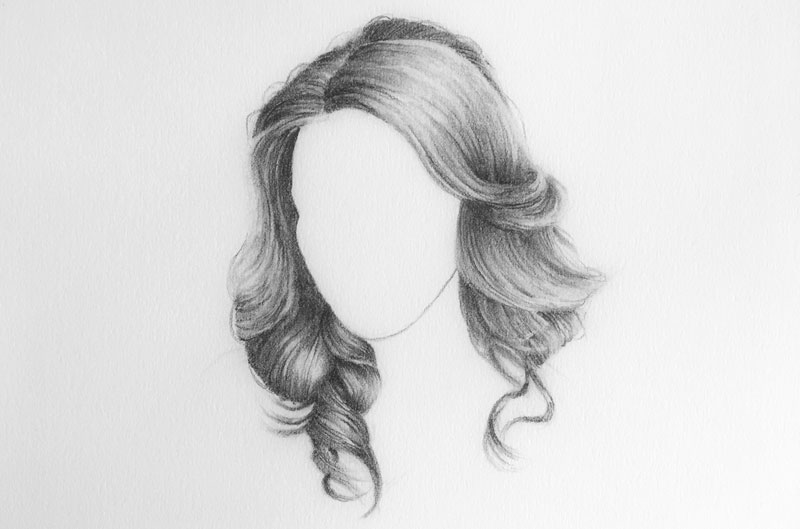
Hair is circuitous and is therefore complex to draw. Merely past breaking downwards the steps, we can simplify the procedure a flake. If you know how to run into hair in terms of shapes, lines, and values then information technology becomes simply like drawing anything else.
Drawing a Strand of Hair
As is the example with any subject that y'all describe, practice is important. The more that we practice with a particular subject, the amend nosotros understand it. Cartoon a whole head of hair volition give you lots of practice. However for some, the thought of doing this may exist intimidating. Instead, it may be better to tackle a portion of the hair showtime. In this example, a single strand of hair volition practise.
Y'all may start past taking a photograph of someone's hair - perhaps your ain. Try to isolate one portion of the hair. Look for a divers collection pilus that forms a shape.
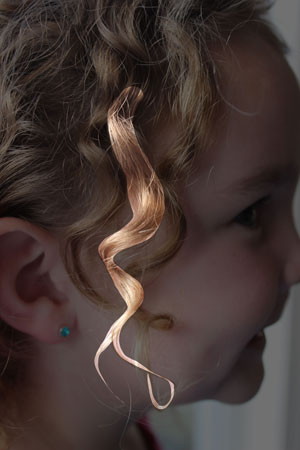
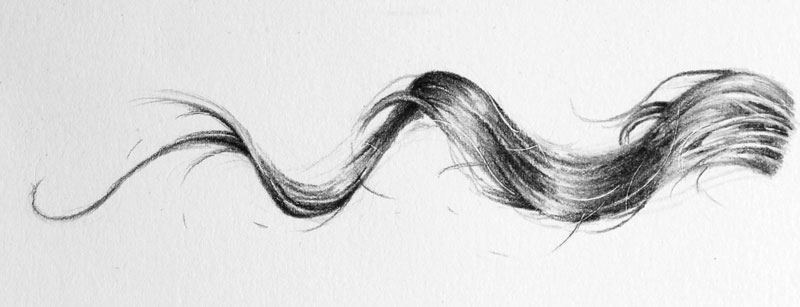
The four stride approach that we explored above can also be used for a single lock of hair...
- Outset by defining the shape with light, loose lines.
- Interruption the shape of the lock of hair down into simpler shapes.
- Look for the dominant shapes of light, nighttime, and heart values.
- Develop the texture and the value with directional strokes.
Drawing Straight Hair
In both of our first two examples, we saw how to draw hair that is wavy. But not anybody has wavy hair. Then how is this process unlike if the hair is straight?
Well, it's non that different. In fact, we'll use the same approach to describe hair of any manner. The just exception with straight hair is that we're likely to meet less dramatic changes in value. We'll withal see contrast between darks and lights, but this volition happen from layering instead of within each "clump" of pilus.
And so again, we'll beginning define the outer contour of the shape of the hair. And again, we tin simplify this farther into smaller shapes that describe the clumps.
From here, we can expect for the relationships of values. It may assist to squint at your subject. Doing this may make the shapes of lighter and darker value stand out a bit more.
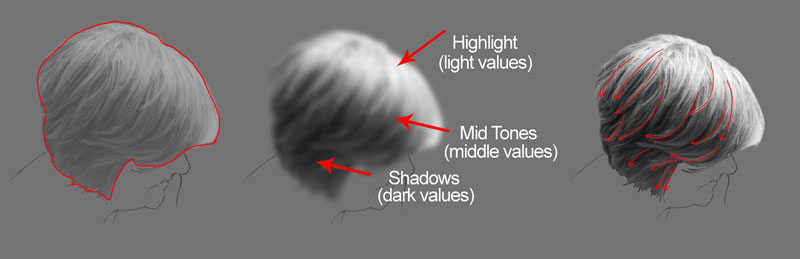
So nosotros'll utilise directional stroking to develop the texture and the range of value.
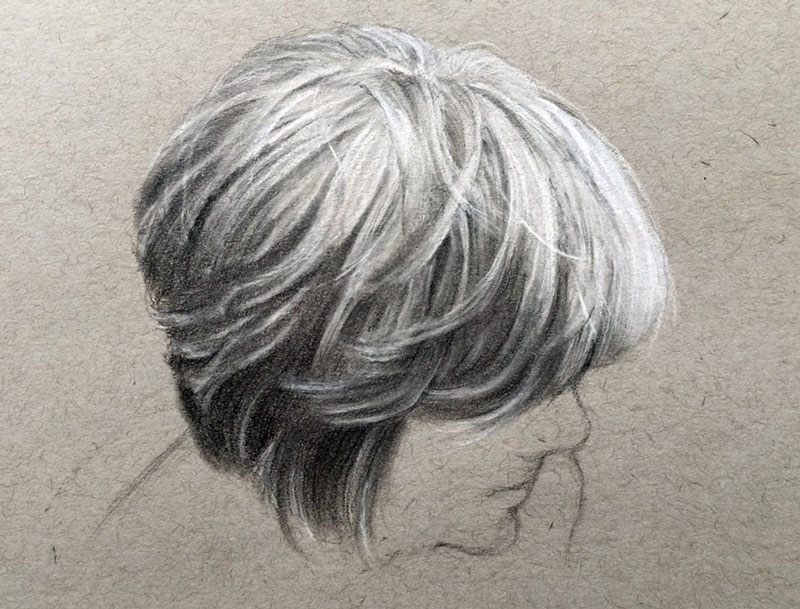
In the example below, a combination of graphite and white charcoal is used to develop the cartoon. The cartoon is completed on toned newspaper which makes the white charcoal applications stand out. The image below is from Portrait Drawing The Smart Way.

How to Draw Curly Hair
But what well-nigh curly hair? Shouldn't this type of hair be different?
Well, the results may be different, just the idea process is the aforementioned. We'll still demand to get-go with the overall shape of the hair. Curly hair tends to accept more than devious hairs that find their way exterior the confines of the general shape. For this reason, we'll concentrate on drawing the shape without all of the stray hairs. These stray hairs can be added after the general shape has been drawn, but more than on this in a moment.
After the general shape has been divers, nosotros'll consider the light source. In this case, the light source originates from the upper correct corner. This produces highlights on the upper correct portion of the caput. Fifty-fifty though we have light areas here, we'll nevertheless see some dark values as well. This is true even if the hair is calorie-free in color.
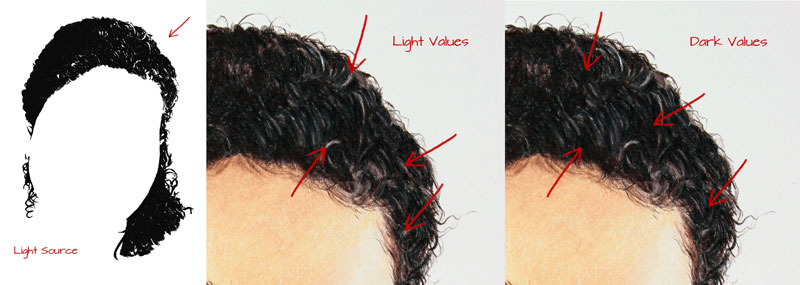
Once we have a good understanding of the lite, we tin can begin developing the texture and value of the hair. The directional strokes that are used should flow along the form of each drove of hairs. With curly hair, the collections are smaller and more meaty. Since the hair is curly, the directional strokes that nosotros make for each "clump" should besides curve just as the hair does.
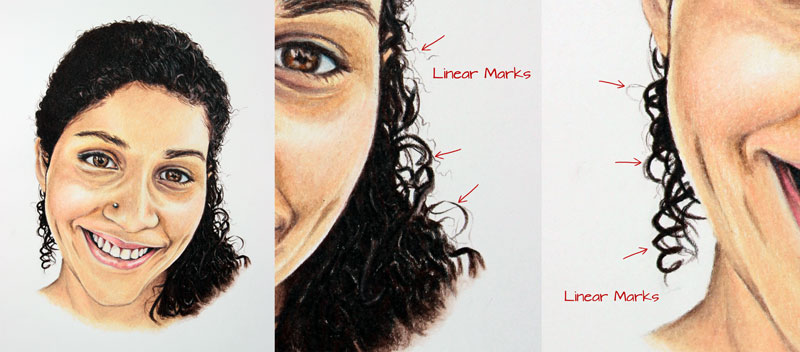
Once we have the main body of the hair developed, nosotros tin go back and add those devious hairs. Doing this adds to the realism. Deliberate and confident marks work best for stray hairs. Information technology doesn't have to be an verbal copy of the subject, so don't put as well much pressure on yourself to brand it perfect.
Beneath you'll see the finished portrait drawing from The Colored Pencil Grade forth with shut ups of the marks used for stray hairs.
Dissimilar Approaches
There is no truthful formula for drawing hair. Every head of pilus is unique and like many aspects of figure drawing, changes in viewpoint can dramatically bear upon the arroyo that you take. Light reflects off of pilus differently and textures are diverse.
Observation is always paramount to your success no thing what approach yous take or method yous cull to utilize. There are ever multiple "rights" and different ways of seeing.
Another Example - Stride by Step
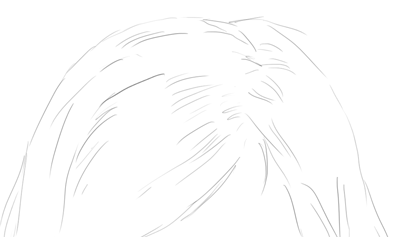
Begin by drawing the outline of the exterior of the hair. Notice the dark areas and the light areas in the hair. Attempt to map out these areas every bit shapes. Don't try to draw every strand of hair. Instead, concentrate only on shapes and the value inside them.
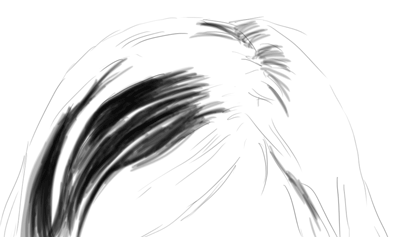
Next, begin to add value to the darker shapes commencement. You'll want to build upwardly the value slowly. Be conscientious not to get also nighttime likewise chop-chop. Again, don't recollect about hair - think shapes, values, and lines.
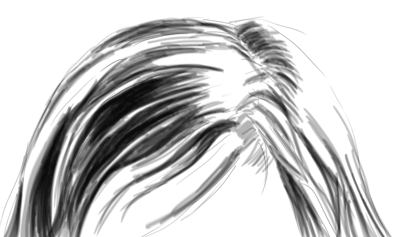
Go on darkening up the shapes and lines that yous come across. When you add directional lines in the hair, brand sure that they flow in the management that the hair grows.
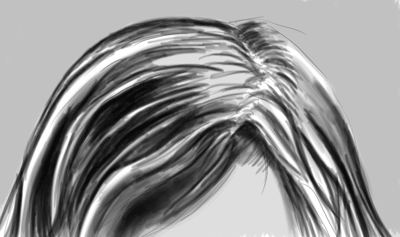
Contrast is important. Be certain to have a background value in mind. This will make your pilus stand out.
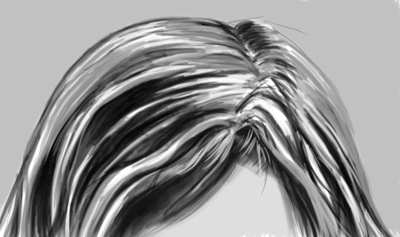
Don't be afraid to work the values to increase the contrast. Adjust darker tones by adding additional applications of graphite and make areas lighter with your eraser.
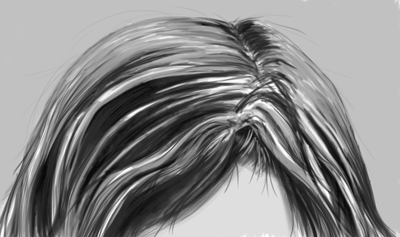
Be patient and sympathise that drawing pilus is slow process. Take your fourth dimension and permit the drawing to develop gradually.
More Lessons You'll Love...

Source: https://thevirtualinstructor.com/how-to-draw-hair.html
Posted by: tatesincom.blogspot.com
0 Response to "How To Draw Hair How To Draw Hair For Beginners"
Post a Comment